




Consortium C4Capture for aluminium: heading towards the decisive tests in 2026
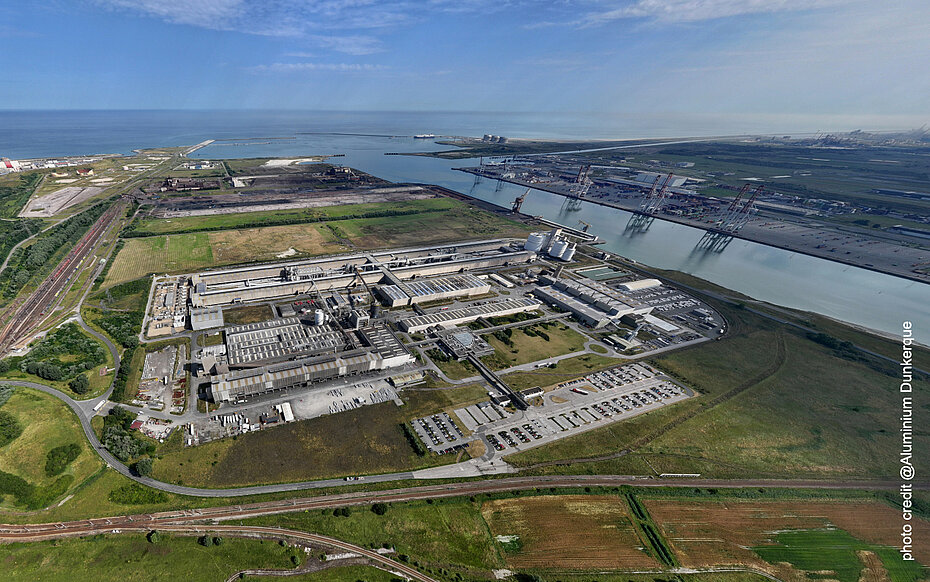
After the conception, ordering and installation of prototypes between 2024 and 2025, the C4Capture consortium partners met on 14th of January 2026 at the Aluminium Dunkerque site to start the pilot tests in real condition. These trials, which will take place throughout the year in both Dunkerque and Saint-Jean-de-Maurienne, will mark a decisive step in confirming the technical and economic feasibility of the solution and guiding strategic decisions for the industrial phases.
They have the ambitious goal of contributing to a 50% reduction in direct CO₂ emissions (excluding energy) from Aluminium Dunkerque primary aluminium production by 2030.
Technological barriers and developed solutions
The project faced several major challenges with the development of an innovative CO₂ pre-concentration system using mini hoods, aimed at achieving levels close to gas industry standards, as well as a testing system based on amine absorption technology adapted to the specific characteristics of gases produced by aluminium electrolysis pots.
Winner of the DEMIBaC call for projects
This project is supported by the French Government as part of the France 2030 plan and was selected as a winner of the DEMIBaC call for projects (which stands for demonstration and industrial adoption of low‑carbon production solutions), led by ADEME (the French Agency for Ecological Transition).
This recognition confirms the relevance and ambition of the consortium’s approach to accelerating the decarbonization of the aluminium industry.
Aluminium, a key material for the low-carbon transition
Aluminium is a key element for decarbonization: It plays a central role in lightweighting vehicles and its share in automotive applications is expected to rise by 13% between 2014 and 2050. It also supports growing demand driven by electrification and the replacement of single‑use plastics.Its exceptional recyclability also makes it a cornerstone of the circular economy.
As a reminder, primary aluminium production accounts for 2% of the global emissions of greenhouse gases, with an average of 16,1t CO₂ emitted per tonne produced. The French producers are already well below this average (4t CO₂/t) but are now aiming for net zero emissions.
A partnership-based approach: a key factor for success
Working in partnership ensures the development of solutions that meet real-world needs and are immediately tested in actual operating conditions. The combination of experts in each technology has resulted in the following prototypes:
- Aluminium Dunkerque and Trimet at Saint-Jean-de-Maurienne have combined their expertise to help develop this technology at their respective sites.
- Rio Tinto, one of the world's largest aluminium producers, has expertise in the electrolysis process.
- Fives brings over 60 years of experience in capturing and treating gas emissions from primary aluminium production.