






When proactive maintenance prevents machine downtime and defective parts
In the aerospace sector, every machined part must meet strict requirements for precision and reliability. At one of our clients’ machining centers, significant vibrations on five machines were causing a critical defect to appear on the part being produced. Thanks to CortX Alchemy, the machining center has been able to improve its uptime and productivity.
Problem:
Twice a year critical defects were occurring in parts currently in production. The production and maintenance teams had to respond urgently, without having the necessary insight to anticipate or resolve the problem permanently. Despite several analyses, no reliable diagnosis could pinpoint the exact cause of the discrepancies.
THE PROPOSED SOLUTION
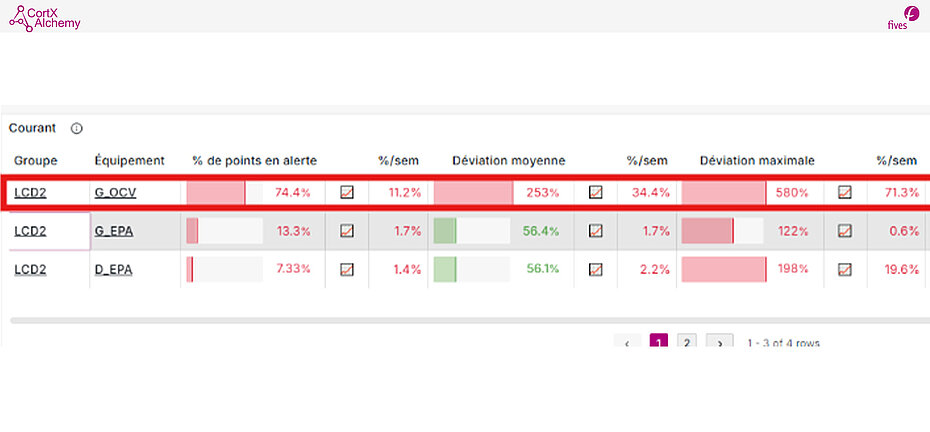
Dry Run Cycle Analysis
The first step involved connecting the machine to the gateway via the DiziScop tool without modifying the PLC program or interrupting production. A set of key data points was collected and then contextualized using the « Dry Run Cycle Analysis » use case.
Subsequently, the use of this use case enabled the maintenance teams to rely on facts to understand the problem and identify a gradual drift on a machine axis, which had previously been difficult to detect. The diagnosis confirmed advanced wear of the ball screw, causing vibrations and threatening the quality of the parts produced.
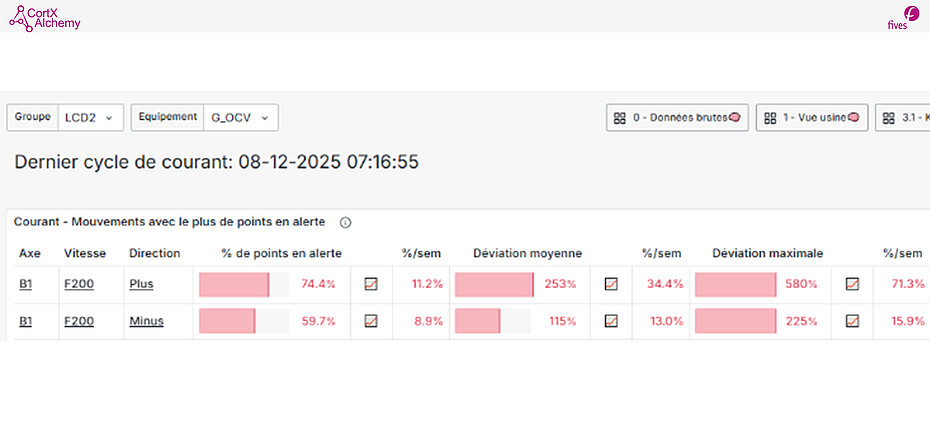
In the table above, the performance indicators for the G OCV unit are shown in red, indicating a deviation.
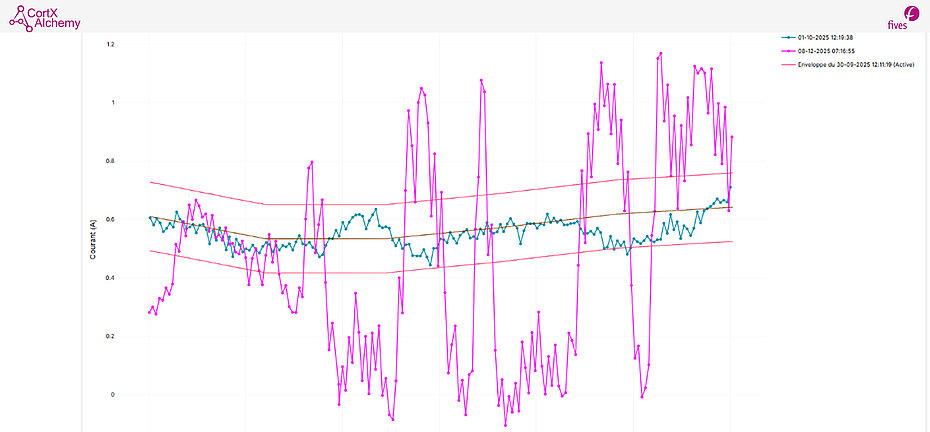
The analysis of the currents then confirms the diagnosis: from the first cycle (in blue) to the last (in pink), the drift trend is clear. The force on the shaft is increasing, exceeding the reference envelope and revealing significant mechanical deterioration.
Le cas d’usage « Analyse de Cycles à vide » consiste à évaluer les performances de la machine lorsqu’elle fonctionne sans charge, grâce à un contrôle régulier du courant des axes et jeux à l’inversion. Il permet de détecter des anomalies, d’anticiper des dérives, d’optimiser les réglages et de garantir que la machine fonctionne efficacement avant de traiter des pièces réelles.
BENEFITS FOR THE CLIENT
When deviations are anticipated, it is possible to avoid six days of unplanned downtime and four to six rejected parts. Production runs more smoothly and is better controlled.
Thanks to the contextualization and clear analysis of machine data, teams have a reliable picture of the actual condition of the equipment. Decisions are made at the right time, leading to greater reliability, improved productivity and quality that meets specifications.